
Constructed conflict: how selective narratives normalise lethal wolf management in the Netherlands
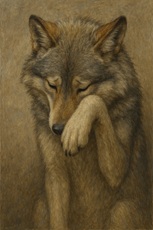
Alarmist narratives about bold or dangerous wolves in the Netherlands are scientifically unfounded and politically convenient, rather than being driven by the supposed uniqueness of Dutch conditions. Selective framing and unacknowledged interference - rather than natural wolf behaviour - are creating a manufactured sense of threat in the Netherlands. This climate risks normalising lethal control and turning every wolf in the Netherlands into a target
Within days of documenting the seemingly casual malice of Luigi Boitani’s views on the expendability of wolves, and the overbearing influence these have in shaping European policy (1) I came across a more recent interview he had taken part in earlier this year, and which fitted with the pattern of all his other talks, interviews, and policy roles. Boitani was being interviewed by Debbie Rijnders about the wolf in the Netherlands, as part of the Animal Matters podcast series (2). They were joined by Erwin van Maanen, who Rijnders described as an ecologist that brought his “expertise and direct involvement in several incidents” to help explain the situation in the Netherlands. More on these “incidents” later.
The managing of all populations, it's a daily job
Boitani used his usual scare tactic of saying that wolves would multiply in the Netherlands and descend into the centre of Amsterdam – “I mean the first question you could ask yourself is why not? Why not? And people wonder, oh, will they really come downtown in Amsterdam. And I would say, why not? What's against that?” (3). He justifies this with another of his frequent assertions – “So, they can live everywhere and they can feed on everything. They have a very flexible biology in terms of behaviour, ecology and whatever. So, if you let them do what they want, you will have them downtown together with people. No doubt”. This is just not borne out by research on the diet of wolves and their temporal and spatial strategies to avoid human disturbance (1,4-6).
In what was an astonishing view from an alleged wolf expert, Boitani - when asked about the potential destabilization of wolf packs when members of it are culled - claimed he was “not really very much excited by this discussion and I think it's quite irrelevant in the end” (3). He went on to say - “What really makes a difference is that we should be aware that a wolf population can increase up to 34% a year, which is a huge increase. So, knowing that, we know that we have to intervene quite quickly on the basis of the political decisions. Do the Dutch people be ready? Are they ready to have wolves downtown Amsterdam? Yes. Okay, let's go”. I distrust as unfounded Boitaini’s seeming indication that the population of wolves will rise inexorably to the point that they will break with all their natural instincts of caution and populate areas of high human disturbance. It is this quick intervention he advocates that characterises Boitani’s normalisation of lethal control of wolves for population management.
Boitani was asked by Rijnders how the Netherlands should interpret a favourable conservation status for the wolf. His response was bizarre – “when we speak of a population, we speak of an entity that is relatively homogeneous in terms of numbers of wolves, densities, ecology and way of management. So, it's not a biological population. It's just a population in terms of management”. Must we consider a wild species not as a free-living biological population, but as a population to be managed? Boitani was probably aware of the report that set out to determine a Favourable Reference Value for the potential wolf population in the Netherlands that I previously scrutinised (1) as he said that the “Netherlands can agree to have one two three,10,11, 50 packs, whatever you decide, and then stick on that knowing that that requires constant management, daily management, not once in a while …… The managing of all population is a daily job” (3)
Boitani claimed that wolves do not regulate their own population, that they are limited by food supply – “So, the population would increase up to the level where there is a limit posed by the amount and availability of food. And normally this level in a heavily humanized area like Europe is higher than we are able to support. That's why at a certain level and in a certain case, removal is necessary to keep it in balance with our needs and our possibilities”. The assertion that wolves do not regulate their own population has been empirically challenged (7) and would appear to be refuted by the LIFE WOLFALPS EU project on improving wolf-human coexistence at the Alpine population level by pointing out that wolf packs are territorial, defend their territories against intrusion from other wolves, and that there are known intraspecific lethal attacks in the Western Alps where wolves have been killed by other wolves (8). Boitani, however, went past denying that it’s an ecologically determined population, and defined it as a population limited by socio-economic considerations. There was again his assertion that scientists provided information and advice, but that balancing those “needs and possibilities” was again a budgetary calculation – “What is the limit and what's the cost that the local community is ready to pay” (3)
The Dutch landscape allegedly forces close encounters, making habituation more likely
More worrying was that Boitani, van Maanen and Rijnders colluded in claiming that the Netherlands was somehow different in producing more “confident” or “bold” wolves than other countries, that wolves behaved differently in the Netherlands than in other countries, van Maanen saying of his experience of observing the return of the wolf to the Dutch-German border – “I encountered a very different wolf than here in the Netherlands”. This was allegedly because the Netherlands was a “densely populated” country. Boitani said that “nowhere else we find the conditions that you have in the Netherlands. The Netherlands is basically a big garden. It’s not a nature area”. van Maanen went on to say that “Landscapes are greater, emptier, especially in the northern Germany. There's less population, less interaction between people and wolves, which makes it, well the fact that wolves become less shy is not so much of a problem over there”. Boitani added that the Netherlands was “unique in the coexistence with 600, if I'm not wrong, 600 people per square kilometre. So, you really are an outlier in the Netherlands, and studying wolves there would be extremely interesting” and he added “there's a lot of interaction between wolves and people due to recreational activities” so they “become less shy”
There was a focus on domestic dogs as a factor in this alleged behavioural difference, that “we have a lot of dogs in the Netherlands”. van Maanen appeared to implicate dogs in the change in behaviour of an alleged bold wolf called Bram in the municipality of Utrechtse Heuvelrug – “So, it was raised close to people, and then it started to investigate dogs for example in its settlement area, and it went on from there to actually bite first of all a girl then bite another girl, and then the latest attack was actually firmly biting a woman in the leg, and the last attack was actually dragging a boy into the forest” to which Boitani added “dogs are an easy prey for wolves. The problem is that it has happened already here in Italy that the wolf will come close to the humans to prey on the dog”
The claim was that wolves that had come into the Netherlands were more likely to have become habituated to people, and that they passed this on to their offspring, Boitani stating “we should never forget that, as you said, wolves can learn a lot, especially the pups can learn from mothers and fathers, and they can take up some convenient behaviour for them if it doesn't bring any harm or any risk”. When Rijnders asked Boitani what should happen if a wolf did not respond to efforts to chase it away – “Well, my suggestion and I know that this will not be liked by many people. My suggestion is that in these cases we are considering a potential confident wolf and should be removed”
This is all just alarmist nonsense
The population density of a country implies an even distribution of people across a whole country, when in reality most people live in urban areas. As a simple measure of the variable population density across the Netherlands, the Province of Drenthe has 191 inhabitants per square kilometre compared to 1,423 in South Holland (9). Just taking Drenthe, four of its 12 municipalities have a population density at or below 100 per square kilometre - Aa en Hunze, Borger-Odoorn, Midden-Drenthe, and Westerveld (9). A striking visual representation of this low population in rural areas is given by a raised relief map of the population density across the Netherlands, where the major urban conurbations are seen as isolated collections of tall spires that rise up from a low base (10). This can also be seen by a raised relief map of the population density across Germany (11) despite Germany as a country having half the population density of the Netherlands (12). It is therefore never acceptable to use such simplistic generalisations to make comparisons like Boitani and van Maanen did.
Nor does it make sense when along with land cover, low human population density and degree of human impact, as well as distance from built-up areas and roads, were all factors used in recently determining that the Netherlands has the ecological carrying capacity to support 23 to 56 wolf packs (13). The results showed a clear difference in suitability between the eastern and western parts of the country, which was likely related to the level of human influence (see Fig. 4 in (13)). It is the areas of low level of human influence in the east where the current distribution of wolf territories in the Netherlands can be found (compare Fig. 4 in (13) with the map of current wolf territories in (14)) showing that wolves are following their innate instinct of finding and settling in the least disturbed areas and so avoiding conflict with people.
The focus on domestic dogs was a diversion, as the allegation that wolves were attracted to dogs because they are an easy prey is a fallacy in the Netherlands. A recently published study conducted from 624 droppings collected over 2023 in both the Veluwe and Drenthe showed that the wolf's diet consisted primarily of ungulates, with roe deer, wild boar and red deer as the main prey species (6). In contrast, the combined frequency of occurrence of DNA in the droppings from other carnivores consumed, which included not just dogs, but also cats, badgers, foxes, mustelids, and unknown carnivores, was only 3%. Moreover, I suspect that incidences of domestic dogs worrying people is considerably higher than wolves, because certainly attacks on livestock by uncontrolled and feral dogs frequently outweigh those caused by wolves, as examples from Spain and Portugal show (15,16).
We may never know why wolf Bram in the municipality of Utrechtse Heuvelrug behaved in a way that was interpreted as aggressive, and which led to his judicial execution, when other explanations exist (see (17) for more discussion on this). Van Maanen thought it was because of its “closeness with people, which caused it to interact with people physically, I think. So, it's not only due to wolves being fed I think, which is often suggested” (3). Both van Maanen and Boitani refuted that it had anything to do with that wolf defending its cubs. Boitani’s opinion was – “This is bullshit. Really” while van Maanen said “there was no evidence that wolves normally don't aggressively defend their pups”. Then came an astonishing admission from van Maanen – “I've observed Bram with his pups and I've also been very close to the pups in Bram's presence, but he never showed aggressive behaviour at that time”. This admission undermines his own narrative. If Bram tolerated a human near his cubs without aggression, then Bram was not behaving as a stereotypically bold or problematic wolf. Thus, the later incidents cannot be simplistically attributed to habituation. Moreover, van Maanen’s personal proximity may itself have contributed to the wolf’s tolerance of humans. Yet he never acknowledges this possibility.
How then are we to interpret this alleged boldness of Bram? A recent study on bold wolves between 2012-2022, a period when wolves were returning to many new areas as its population across Europe increased from 11,193 to 20,300 (18) could find only 20 definite cases that met the criteria for bold or strongly habituated wolves (19). Moreover, it was observed that in cases where a single wolf was involved in a confrontational situation, the majority (87%) were young (yearlings or pups) and which aligned with studies indicating that young and dispersing wolves were more likely to develop bold behaviour than adults. Perhaps it’s an uncommon aspect of that phase while the wolves travel and establish themselves in new areas (and see (20)). Bram was already established in his territory.
A recipe for habituation of wolves
There is no denying that the novelty of seeing
newly settled wolves provides fascination, and some onlookers may lose their
judgement in what is a responsible way to behave around them. What I don’t
understand, though, is why the Large Carnivore Initiative for Europe (LCIE)
singled out the Netherlands for advice on bold wolves, when many new areas in
other countries were seeing the return of wolves (see above). In November 2022
the LCIE produced a statement on management of a bold wolf on the Hoge Veluwe
National Park (21). It claimed that it was because of reports in the media in
early October 2022. Essentially, the LCIE saw that it was the park
management's failure to follow established intervention protocols that had
escalated the situation, leaving lethal removal as the only viable option. It
called for all parties to take their responsibility in adhering to guidelines
that the LCIE had earlier produced for human behaviour towards wolves, and
avoiding actions that promoted the habituation of wolves to humans (22). What
happened next shows the power of vested interest, as within days the LCIE
issued a revision of that statement that while it came to similar conclusions
(23) omitted certain key sentences in relation to the park (21):
“This area is managed privately, and the management of the park attempted
to impede colonisation of the park by wolves by fencing off a wildlife passage
over a highway and fauna tunnels, and holds a clearly opposing attitude
towards the presence of wolves. In a statement on their website the management
expresses the desire that wolves be removed from the park so the park can be
once more, free of wolves”
That statement on the park’s website about it being a wolf-free zone, dated as being from March 2022, has disappeared. Also missing from the revised LCIE statement was the claim by De Faunabescherming, a Dutch advocacy group for the interests of wildlife, that the park management had in at least one instance moved carcasses of prey species killed by wolves closer to the Wildbaanweg visitor trail in the park (21). While the LCIE said it could not verify the claim, it held that such behaviour would be a recipe for habituation of wolves to the presence of humans, and should at all times be avoided.
The LCIE must have been annoyed that their advice had seemingly been overlooked because nearly two years later, it wrote a letter, signed by Boitani, to State Secretary Jean Rummenie and the Provincial Governments, on the prevention and management of bold wolf behaviour in the Netherlands (24). The suggestion was that repeated instances of problematic, or potentially problematic behaviour by wolves in the Netherlands was the reason for writing. While there was an emphasis on prevention, and a range of intervention methods advised, such as hazing, there was limited discussion of the root causes of the alleged problematic behaviour. Worse, though, were the implications of some of the advice given. The LCIE called for well‑equipped intervention teams on permanent standby. However, a highly visible intervention team may create the impression that wolves are inherently dangerous, undermining the public’s acceptance of the presence of wolves in the Netherlands. In addition, while the LCIE stressed non‑lethal steps, the structure of its protocol may make lethal removal more likely in the long term through encouraging authorities to escalate through a fixed sequence.
I wonder if this continued concern about alleged bold wolves is a manufactured tension, promoted by private estates aided by LCIE, and then when stoked by a letter to Rummenie from 10 mayors of municipalities in the Veluwe region that complained about the lack of “management measures” to assuage the “residents' perception of safety” (25). It seems more like a diversion because the predation of livestock doesn’t get enough traction in the Netherlands for demands that the population of wolves be controlled. If this heightened tension over bold wolves and conflict incidents is allowed to persist then every wolf in the Netherlands will be a target.
Mark Fisher 12 February 2026
(an earlier version of this article was written for the Wolves in Utrecht website:
(1) Killing wolves for coexistence, Self-willed land January 2026
www.self-willed-land.org.uk/articles/killing_wolves.htm
(2) Mens – Dier, AnimalMatters
https://www.animalmatters.nl/mens-dier
(3) Debbie Rijnders speaks with Prof. Luigi Boitani and Erwin van Maanen about the wolf in the Netherlands, AnimalMatters Youtube Jan 11, 2026
https://www.youtube.com/watch?v=YzaI1PHfdIQ
(4) Science not politics should govern our acceptance of wolves, Self-willed land November 2024
ww.self-willed-land.org.uk/articles/wolves_science.htm
(5) The right to existence of a non-human species, Self-willed land March 2025
www.self-willed-land.org.uk/articles/shoot_shovel_silence.htm
(6) Groen, K., van der Veken, T., Mikova, D., Trimbos, K., de Iongh, H., & Lelieveld, G. (2025 ) Onderzoek naar het voedingsgedrag van wolven (Canis lupus) in Nederland. Betreft onderzoeksjaar 2023. Universiteit Leiden, Stichting Leo, Universiteit Antwerpen, De Zoogdiervereniging, Projectkenmerk: br23.019, v8, 04-04-2025
(7) Wallach, A. D., Izhaki, I., Toms, J. D., Ripple, W. J., & Shanas, U. (2015). What is an apex predator?. Oikos, 124(11), 1453-1461
https://www.jstor.org/stable/oikos.124.11.1453
(8) “No, the number of wolves will not grow exponentially at the local scale”, Misconceptions, LIFE WOLFALPS EU (2018-2024)
(9) Regionale kerncijfers Nederland, StatLine, Gewijzigd op: 31 december 2025
https://opendata.cbs.nl/#/CBS/nl/dataset/70072ned/table?dl=B01D1
(10) Raised relief population density map of the Netherlands, Terence Fosstodon (@researchremora) 22 December 2022
https://brilliantmaps.com/wp-content/uploads/pop-density-netherlands-768x576.jpg

(11) Raised relief population density map of Germany, Terence Fosstodon (@researchremora) 17 December 2022
https://pbs.twimg.com/media/FkNZm43WIAM8rdQ?format=jpg&name=900x900
(12) European Countries By Population Density, WorldAtlas
https://www.worldatlas.com/geography/european-countries-by-population-density.html
(13) Biersteker, L., Planillo, A., Lammertsma, D. R., van der Sluis, T., Knauer, F., Kramer-Schadt, S., van der Grift, E. A., van Eupen, M., & Jansman, H. A. H. (2025) Habitat suitability for wolves in the Netherlands: a modelling approach. (Report/Wageningen Environmental Research; No. 3350 (English version)). Wageningen Environmental Research
(14) Wolvenmonitoring 1 februari – 23 mei 2025, Overzicht verspreiding wolven,
(15) Los perros incontrolados y salvajes causan tres veces más ataques al ganado que los lobos, Antonio Cerrillo, La Vanguardia 20/04/2025
(16) Lino, S., Rossa, M., Fernandes, J.M., Barros, T., Lino, A., Hipólito, D., Ferreira, E., Aliácar, S.C., Cadete, D., Fonseca, C. and Torres, R.T., 2023. Dog in sheep’s clothing: livestock depredation by free-ranging dogs may pose new challenges to wolf conservation. European Journal of Wildlife Research, 69(6), article 7
https://link.springer.com/article/10.1007/s10344-023-01740-9
(17) Schokkend! Erwin van Maanen: “Ik ben ook heel dicht bij de welpen geweest terwijl Bram erbij was”, Wolven van de Utrechtse Heuvelrug 4 februari 2026
(18) Blanco, J. C., & Sundseth, K. (2023). The situation of the wolf (canis lupus) in the European union: An in-depth analysis. A report of the N2K Group for DG Environment, European Commission.
(19) Frýbová S., Fazzi P., Kutal M., López-Bao J.V., Reinhardt I. … Salvatori V., 2025. Bold wolf behaviour: definitions and analysis of reported past cases across Europe. Report for LIFE WILD WOLF project LIFE21 NAT-IT-101074417, Task 2.1, in collaboration with the IUCN Large carnivore Initiative for Europe (LCIE). Istituto di Ecologia Applicata
https://lciepub.nina.no/pdf/638742571606602771_Technical_report_T2.1_WW_LCIE.pdf
(20) Jonge wolven trekken de wereld in: obstakels en gevaren, Lotte Rinzema, rtv Drenthe February 1, 2026
https://www.rtvdrenthe.nl/nieuws/18162989/jonge-wolven-trekken-de-wereld-in-obstakels-en-gevaren
(21) Management of a bold wolf on the Hoge Veluwe National Park: Statement of the Large Carnivore Initiative for Europe (LCIE), IUCN Species Survival Commission Specialist Group, 9/11/2022 https://defaunabescherming.s3.eu-central-1.amazonaws.com/doc/2022/2022-11-09+LCIE_2022_Habituated_wolf_Hoge_Veluwe_V2.pdf
(22) LCIE (2019). Policy Support Statements of the Large Carnivore Initiative for Europe (LCIE): Management of bold wolves. LCIE. https://lciepub.nina.no/pdf/636870453845842163_PPS_bold%20wolves.pdf
(23) Management of a bold wolf on the Hoge Veluwe National Park: Statement of the Large Carnivore Initiative for Europe (LCIE), IUCN Species Survival Commission Specialist Group, 23/11/2022. This statement supplements and replaces a previous one posted on 9/11/2022.
https://lciepub.nina.no/pdf/638048861211836198_Habituated%20wolf%20Hoge%20Veluwe_V4A.pdf
(24) Letter on the prevention and management of bold wolf behaviour in the Netherlands 14 August 2024, To: - Mr Jean Rummenie, State Secretary for Agriculture, Fisheries, Food Security and Nature, staslvvn@minlnv.nl - The Governments of the Provinces of the Netherlands, communicatie@ipo.nl
https://lciepub.nina.no/pdf/638593115775454502_Letter_bold_wolf_Netherlands.pdf
(25) Burgemeesters van Ermelo en nog negen Veluwse gemeenten schrijven een brief over noodzaak voor beheersing van de wolf, Ermelo's Weekblad December 20, 2024
url:www.self-willed-land.org.uk/articles/bram.htm
www.self-willed-land.org.uk mark.fisher@self-willed-land.org.uk